COD measures the total oxygen required to chemically oxidise the organic (and some inorganic) matter in wastewater. MBBR biology removes the biodegradable fraction of COD; the inert, non-biodegradable fraction passes through and sets a floor on achievable effluent COD. Understanding the split between biodegradable and inert COD is essential when MBBR is applied to industrial effluents, where inert COD can be significant.
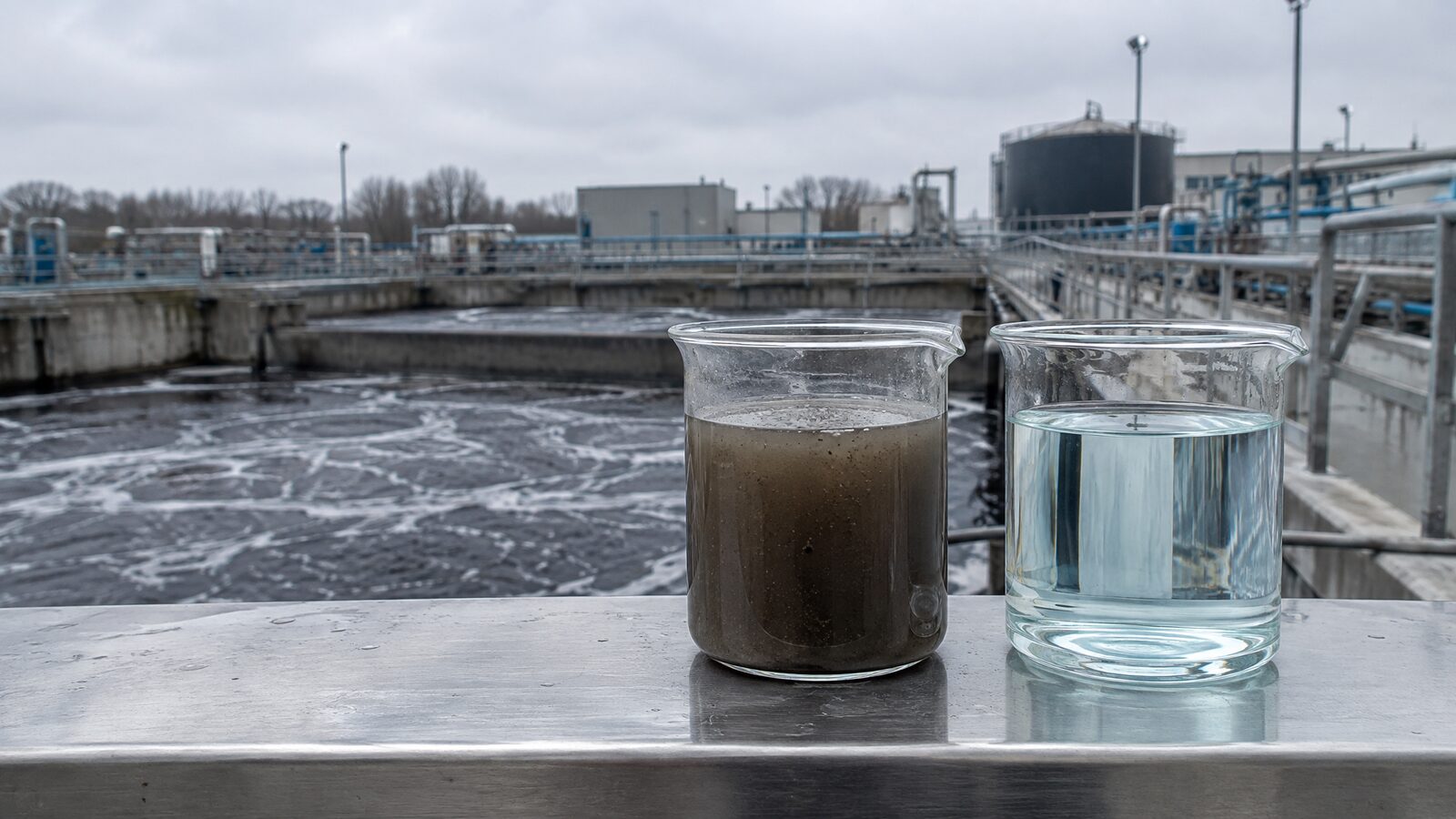
Biodegradable vs. Inert COD
Total COD comprises a readily biodegradable fraction, a slowly biodegradable fraction and an inert fraction. Biological treatment — including MBBR — can only remove the biodegradable portions. For municipal wastewater the biodegradable fraction dominates, so high COD removal is achievable. For some industrial effluents the inert fraction is larger, which limits the effluent quality reachable by biology alone and may call for a polishing step. Characterising this split is a prerequisite to setting a realistic COD target.
MBBR handles high organic strength well because biomass is retained on the carriers, so the process tolerates load peaks that would wash out a suspended-growth system.
COD Removal Design Context (indicative literature ranges — confirm per project)
| Parameter | Typical Value | Unit | Notes |
|---|---|---|---|
| SALR — high-rate / roughing | > 15 | g BOD/m²·d | Partial COD removal |
| SALR — full carbon removal | 5 – 15 | g BOD/m²·d | High biodegradable-COD removal |
| Effluent floor | inert COD | — | Non-biodegradable passes through |
| Design DO | 2 – 3 | mg/L | For carbon-only duty |
Typical Applications
COD-removal MBBRs are widely used as roughing stages ahead of municipal plants and for industrial effluents from food and beverage, pulp and paper, and chemical processing. As a high-rate roughing stage, an MBBR can remove a large share of the organic load in a compact footprint, relieving a downstream biological stage. As a full carbon-removal stage, it drives biodegradable COD down toward the inert floor.
Frequently Asked Questions
Can MBBR remove all COD?
Why is MBBR suited to industrial COD removal?
What is a roughing MBBR?
Related Pages
Need MBBR Design Support?
Submit your wastewater data for a preliminary MBBR engineering assessment. Our team reviews every submission within 2 business days.