MBBR media are small, buoyant plastic carriers that provide a protected surface for biofilm to grow. Over the years several generations have emerged — differing mainly in shape, size and the amount of protected internal surface they offer per cubic metre. The right type depends on the treatment target, the loading and the reactor geometry.
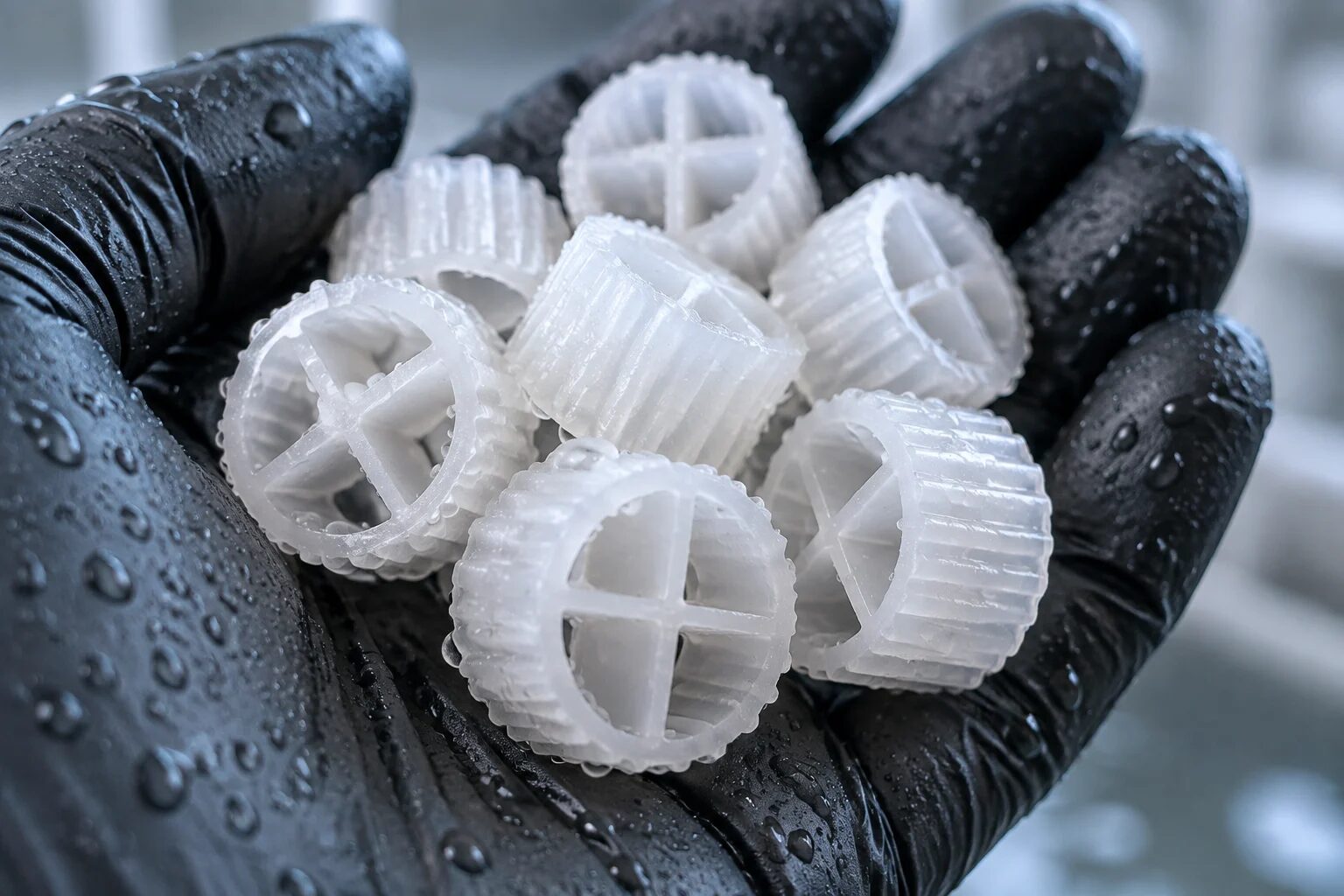
The main carrier families
Classic wheel / cylinder carriers feature a cylindrical body with internal cross-walls and external longitudinal fins. They are robust, well understood and mix easily. High-surface-area carriers use finer internal lattices to pack more protected area into the same volume, which can reduce reactor size for surface-limited processes such as nitrification. Saddle and chip-type carriers use flatter geometries to expose a large area while remaining easy to fluidise.
No single geometry is universally best. Higher internal surface area is only useful if the biofilm inside stays thin, well-oxygenated and free of clogging — which is why carrier selection is always a balance between surface area, self-cleaning behaviour and the specific pollutant being treated.
How the generations differ
The figures below are indicative literature ranges to illustrate the differences between families. Actual carrier data must be taken from the manufacturer's datasheet and confirmed per project.
Indicative carrier families (confirm per project)
| Parameter | Typical Value | Unit | Notes |
|---|---|---|---|
| Classic wheel / cylinder | Moderate | surface area | Robust, easy to fluidise, widely referenced. |
| High-surface-area lattice | Higher | surface area | More protected area per m³; needs good mixing to stay clean. |
| Saddle / chip type | Variable | surface area | Flatter geometry, large exposed area. |
| Selection driver | Process target | — | Nitrification favours high protected area; carbon removal is more forgiving. |
Frequently Asked Questions
Which MBBR media type is best?
Can I mix different carrier types in one reactor?
Does a higher surface area always mean better performance?
Related Pages
Need MBBR Design Support?
Submit your wastewater data for a preliminary MBBR engineering assessment. Our team reviews every submission within 2 business days.