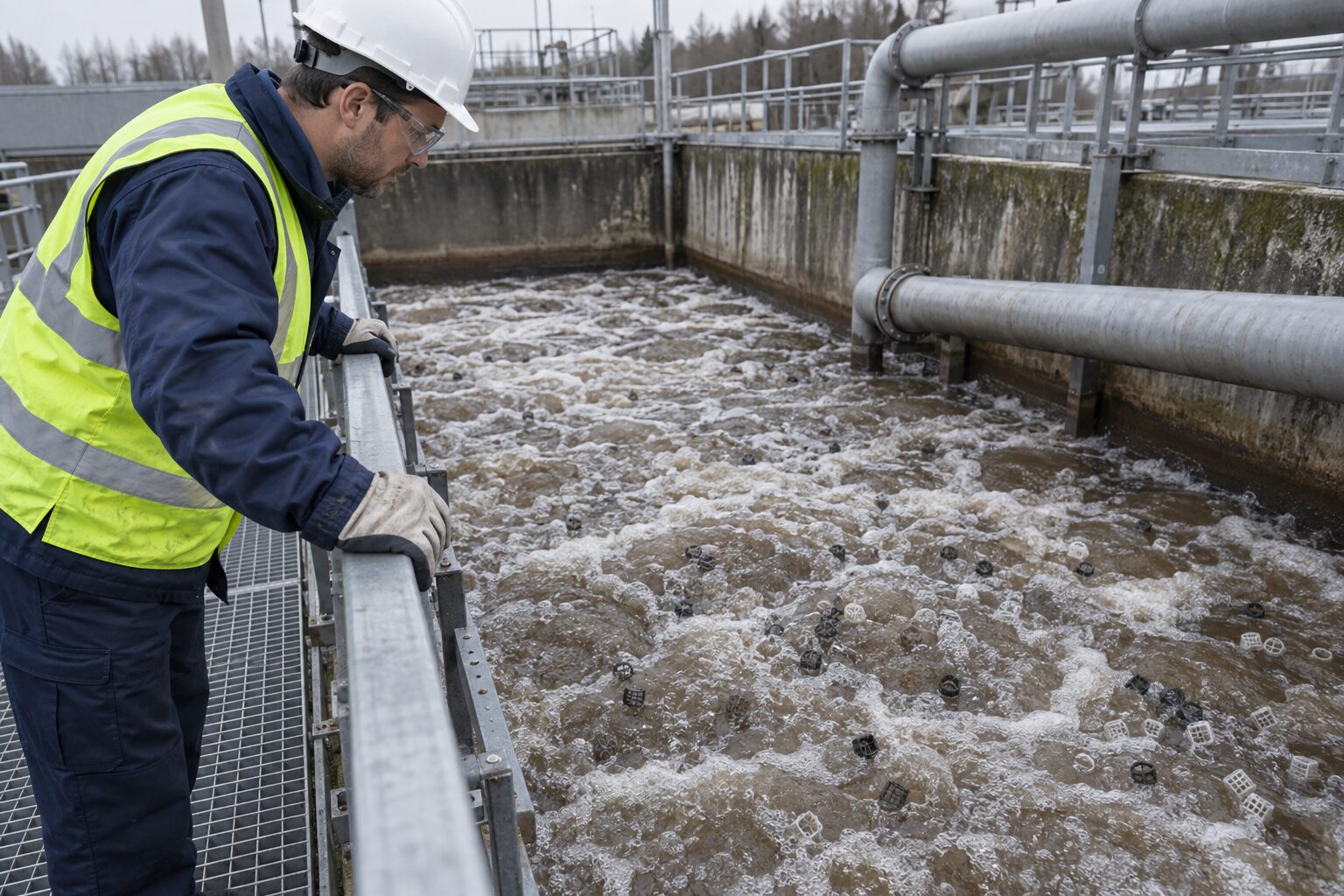
MBBR Troubleshooting
Diagnose and resolve common MBBR operational issues — from effluent quality problems to mechanical and biological challenges.
Most MBBR problems are symptoms, not root causes. A rise in effluent ammonia, a drop in COD removal or carriers that stop circulating are all visible endpoints of an underlying imbalance — in the biology, the aeration, the hydraulics or the solids-separation step. Effective troubleshooting means working backwards from the symptom to the cause in a systematic order, rather than changing several variables at once and losing track of what actually helped.
A reliable diagnostic sequence starts with the basics that support the biofilm: dissolved oxygen, temperature, pH and alkalinity, and whether the carriers are genuinely moving and being scoured clean. Many “biological” failures are really an aeration or mixing problem, or an alkalinity shortage starving the nitrifiers. Only once those fundamentals are confirmed does it make sense to look at loading, biofilm thickness, and carrier condition. Because the biofilm responds slowly, changes should be made one at a time and given time to stabilise before the next adjustment.
Each page below takes a single, specific problem and works through its likely causes and the checks that confirm or rule each one out, so you can move from “what I observe” to “what to change” with confidence. The guidance is diagnostic and general; where a problem points to a design limitation rather than an operational one, an engineering review of the original sizing and configuration is the right next step.
Common MBBR Problems & Diagnostics
High Ammonia in Effluent
Root causes and remedies for elevated effluent NH₄-N.
Poor Nitrification
Systematic diagnosis of underperforming nitrification.
Poor Denitrification
DO intrusion, carbon shortage and anoxic volume issues.
Low COD Removal
Distinguishing biodegradable from refractory COD and fixing the biology.
Poor Biofilm Growth
Why biofilm fails to establish or grow on carriers.
Excessive Biofilm Growth
When carriers become overloaded with biomass.
Media Not Moving
Diagnosing and restoring reactor mixing.
Media Clogging
Carrier channel blockage from biofilm, scale or fibres.
High Energy Consumption
Aeration and energy audit for excessive power use.
Low Dissolved Oxygen
When DO will not reach setpoint despite the blower running.
Need MBBR Design Support?
Submit your wastewater data for a preliminary MBBR engineering assessment. Our team reviews every submission within 2 business days.